- Home
- Learn
LEARNING SPACE 1 OF 5
Learn
Structured lessons: 85 nerve block tutorials by body region, ultrasound basics, perioperative ultrasound, and topic collections.
Nerve blocks by region
Every block page follows the same template: anatomy, ultrasound appearance, technique, indications, contraindications, complications and references.
-
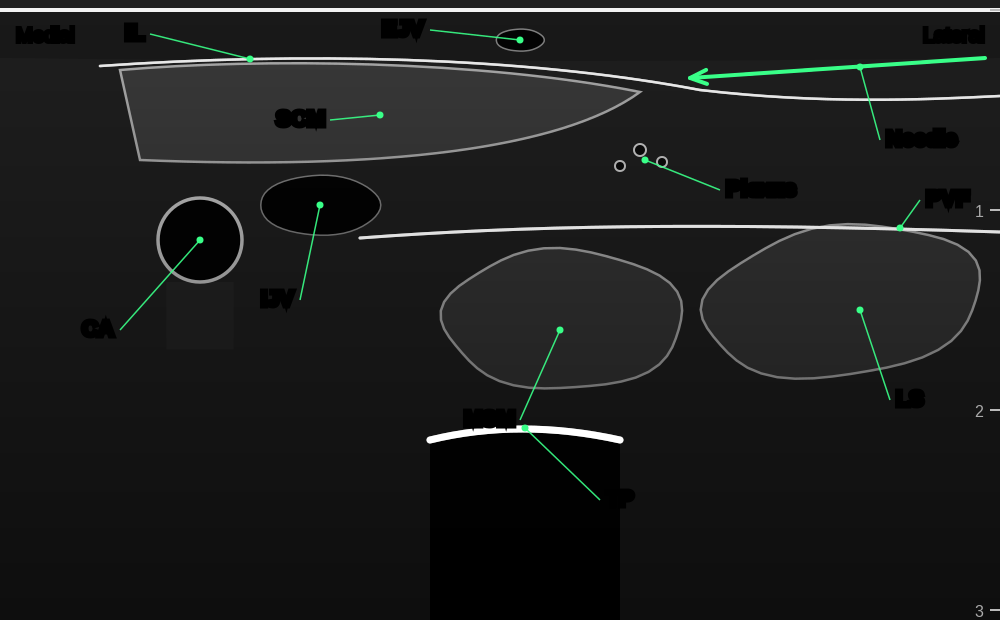 11 BLOCKSHead and neck
Cervical plexus blocks for neck surgery, the cervical erector spinae plane block, the trigeminal branch blocks of the face, the maxillary nerve block, the scalp block and the airway blocks for awake intubation.
-
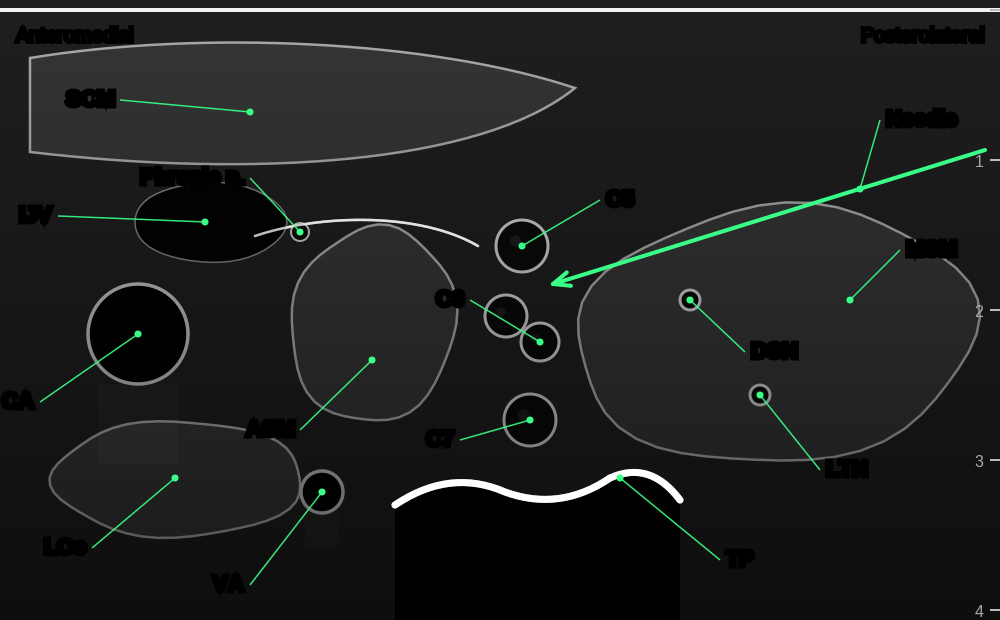 21 BLOCKSUpper limb
Brachial plexus blocks from the interscalene groove to the wrist, plus the terminal nerves and cutaneous blocks for the arm.
-
 20 BLOCKSLower limb
Lumbar and sacral plexus blocks, the hip and knee blocks, sciatic approaches from the buttock to the popliteal fossa, and the ankle.
-
 12 BLOCKSThoracic and chest wall
Paravertebral, erector spinae and the fascial plane blocks of the chest wall and breast.
-
 11 BLOCKSTruncal and abdominal
Abdominal wall blocks: rectus sheath, TAP and its variants, quadratus lumborum and the groin.
-
 5 BLOCKSPelvis and perineum
Blocks for anal, perineal and genital surgery, the groin nerves, and the cluneal nerves of the buttock.
-
 5 BLOCKSNeuraxial and spinal
Spinal, epidural, combined spinal-epidural and caudal techniques.
Topic collections
The same lessons, gathered by topic.
- START HEREBasics of ultrasound Principles, needling, the UGRA routine, identifying structures, local anaesthetics.
- POINT-OF-CAREPerioperative ultrasound (POCUS) Airway, gastric, diaphragm, lung, DVT and focused cardiac ultrasound.
- CHILDRENPaediatric regional anaesthesia Blocks commonly used in children, with weight-based dosing.
- OBSTETRICSObstetric regional anaesthesia Neuraxial techniques for labour and caesarean section, and abdominal wall blocks after delivery.
- CATHETERSContinuous peripheral nerve blocks Catheter techniques, infusion regimes and ward care.
- FASCIAL PLANESAdvanced fascial plane blocks Plane blocks of the chest wall, abdominal wall, hip and pelvis.
- SAFETYRegional anaesthesia complications Recognising and managing toxicity, nerve injury, failed blocks and bleeding risk.
- DRUGS AND SAFETYPharmacology and patient safety Local anaesthetics, safe doses, adjuvants, infusions and the safety routine.
- EVIDENCEClinical guidelines and evidence Guidelines, procedure-specific evidence and new research.
Reviewed by Madan Narayanan