POINT-OF-CARE ULTRASOUND
POCUS
Six bedside scans every anaesthetist can learn: airway, gastric, diaphragm, lung, DVT and focused cardiac ultrasound.
Point-of-care ultrasound (POCUS) lets the anaesthetist answer a focused question at the bedside, in minutes, with the same machine used for nerve blocks. These pages cover six scans every anaesthetist can learn. Each page gives the indication, the set-up, how to scan, what you will see and what it means.
-
 01 · FRONT OF NECK · TUBE CHECKAirway ultrasound
Find and mark the cricothyroid membrane before induction when the neck is hard to feel (obesity, previous surgery, radiotherapy, swelling)....
-
 02 · ASPIRATION RISKGastric ultrasound
Check whether the stomach is empty or full when fasting is uncertain: emergencies, diabetes with gastroparesis, GLP-1 agonist drugs (such as...
-
 03 · PHRENIC NERVE · AFTER A BLOCKDiaphragm ultrasound
Check the phrenic nerve before and after interscalene, supraclavicular, superior trunk and cervical plexus blocks, especially in patients with...
-
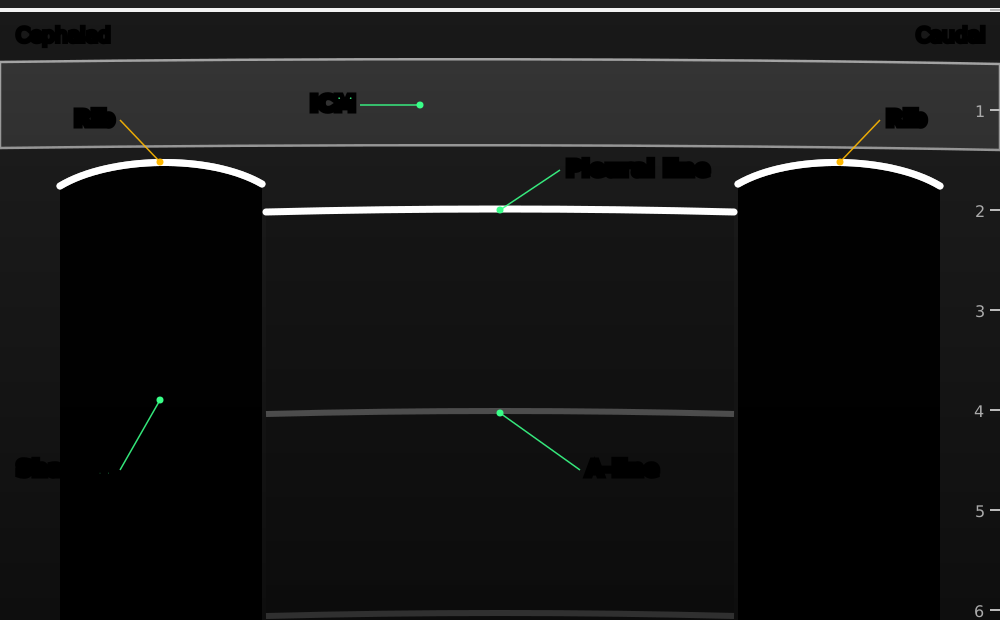 04 · PNEUMOTHORAX · HYPOXIALung ultrasound
Rule out a pneumothorax after supraclavicular, infraclavicular, paravertebral, intercostal or chest wall blocks, or central line insertion.
-
 05 · LEG VEINSDVT: compression ultrasound
Check for a deep vein thrombosis before surgery in a patient with a swollen leg, for example after a fracture or long immobility.
-
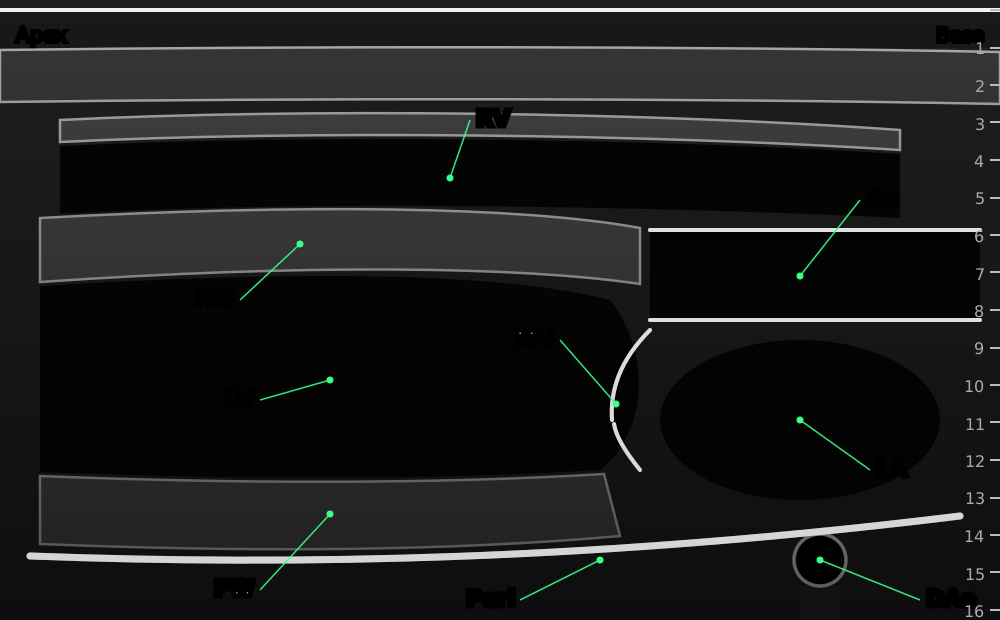 06 · FoCUS · SHOCK · BEFORE SURGERYFocused cardiac ultrasound
Find the cause of low blood pressure or shock: an empty heart (hypovolaemia), a weak heart, a dilated right ventricle (for example, PE), or fluid...
For education. POCUS needs supervised training and practice: get your scans checked, and know when to ask for a formal scan. Illustrations are original schematics, not to scale.