1Learning objectives
- Choose an evidence-based technique for common open and laparoscopic abdominal operations.
- Explain the difference between somatic and visceral pain and what each technique covers.
- Weigh epidural analgesia against bilateral wall blocks and IV lidocaine.
- Plan catheters and total local anaesthetic dose safely.
2Overview
Abdominal pain after surgery has two parts: somatic pain from the wound and abdominal wall, which wall blocks treat well, and visceral pain from the organs, which they treat poorly. Epidural analgesia covers both; wall blocks cover only the first.
PROSPECT has become more selective: after many laparoscopic operations, good systemic analgesia with port-site infiltration is enough for most patients, and wall blocks are kept for those at high risk of pain. For open surgery, epidural or wall blocks remain central.
Clinical pearls
- Match the block to the incision: lateral, subcostal, midline or port sites.
- Wall blocks do not treat visceral pain; plan systemic analgesia for that.
- Never give IV lidocaine and a large-volume block or epidural top-up without one combined dose plan.
3Anatomy and sonoanatomy
Anatomy
- The anterior abdominal wall is supplied by T6–L1 intercostal, subcostal, iliohypogastric and ilioinguinal nerves, running between internal oblique and transversus abdominis, then through the rectus sheath.
- Upper abdomen (T6–T9): reached by subcostal TAP, rectus sheath, external oblique intercostal and upper fascial techniques.
- Lower abdomen (T10–L1): reached by lateral TAP, ilioinguinal and iliohypogastric blocks.
- Midline wounds need bilateral blocks (rectus sheath both sides).
- Visceral afferents travel with the sympathetic nerves; only neuraxial techniques, paravertebral spread and possibly some quadratus lumborum spread reach them.
Sonoanatomy
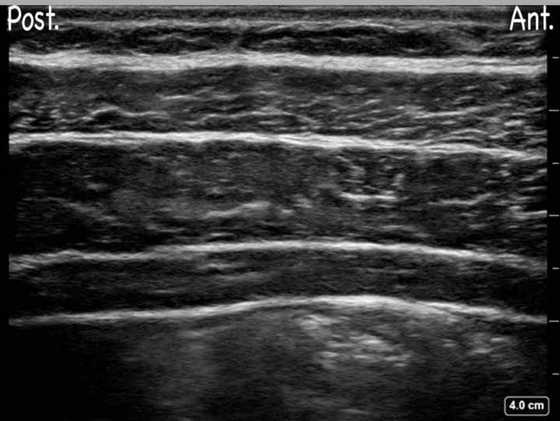
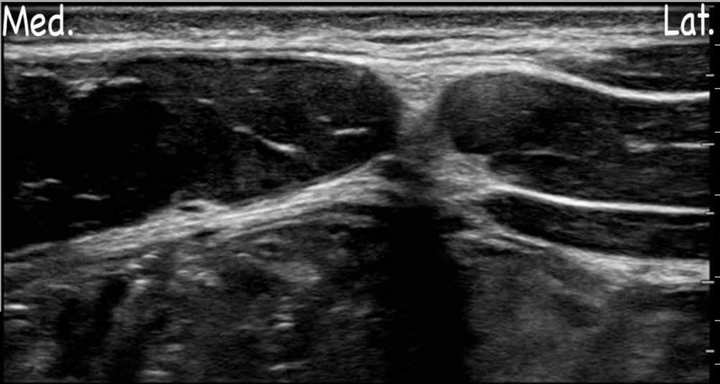
Three muscle layers laterally (external oblique, internal oblique, transversus abdominis), rectus abdominis medially with its posterior sheath, and quadratus lumborum posteriorly. Practise on the scan explorer rectus–TAP–QL journey.
 Ultrasound
 Illustration
Lateral TAP: between internal oblique and transversus abdominis, for lower abdominal wall incisions. Transversus abdominis plane
 Ultrasound
 Illustration
Rectus sheath: between rectus abdominis and its posterior sheath, both sides for a midline wound. Rectus sheath block
 Ultrasound
 Illustration
Subcostal TAP: along the costal margin for upper abdominal and subcostal incisions. Subcostal
 Ultrasound
 Illustration
Quadratus lumborum: posterior abdominal wall; spread varies with approach. Quadratus lumborum blocks
4Patient selection
Indications
- Open abdominal surgery: epidural or wall blocks as part of enhanced recovery.
- Laparoscopic surgery: patients at high risk of severe pain, opioid tolerance, or opioid side effects.
- Patients with obstructive sleep apnoea or respiratory disease, to reduce opioid needs.
Contraindications
- Coagulopathy and anticoagulation for epidural and deep blocks (see the anticoagulation module).
- Sepsis and haemodynamic instability for epidural.
- Infection or stoma at the injection site.
- Planned large-volume intraperitoneal or wound local anaesthetic: reduce block doses.
5Operation by operation
Laparoscopic cholecystectomy
Paracetamol with an NSAID or COX-2 inhibitor, IV dexamethasone, and port-site infiltration or intraperitoneal local anaesthetic. ESP or TAP blocks are second-line options for patients at high risk of pain. Quadratus lumborum and rectus sheath blocks are not recommended (Bourgeois 2024).
Open colorectal surgery
Epidural analgesia is recommended. If an epidural is not feasible, use bilateral TAP blocks, IV lidocaine or a continuous preperitoneal wound infiltration. Do not give local anaesthetic by two routes at the same time (Uten 2024). See the major abdominal surgery case.
Liver resection
Thoracic epidural analgesia or bilateral oblique subcostal TAP blocks with paracetamol and NSAIDs where suitable (Dieu 2021). Coagulopathy after major resection affects epidural catheter removal timing: plan it with the surgical team. See the liver resection case.
Bariatric surgery
For laparoscopic sleeve gastrectomy, bilateral TAP blocks (ultrasound or laparoscopically guided) and port-site infiltration with paracetamol, NSAIDs and IV dexamethasone (Debel 2026). See the obesity module and the laparoscopic surgery and obesity case.
Inguinal hernia
Open repair can be done under local infiltration, an ilioinguinal–iliohypogastric block or spinal anaesthesia. Basic analgesia with paracetamol and an NSAID started in time is the foundation (Joshi 2012). Many patients go home the same day: see the day surgery module.
Major laparotomy
- Midline laparotomy: thoracic epidural, or bilateral rectus sheath catheters with systemic analgesia.
- Upper abdominal transverse or subcostal incision: subcostal TAP or epidural.
- Emergency laparotomy: sepsis, coagulopathy and instability often rule out an epidural; wall blocks or wound catheters are safer options.
Epidural or abdominal wall blocks
| Thoracic epidural | Bilateral wall blocks or catheters | |
|---|---|---|
| Covers | Somatic and visceral pain | Somatic (wall) pain only |
| Main risks | Hypotension, motor block, rare haematoma or abscess, failure rate | LAST from large bilateral volumes, block failure, catheter displacement |
| Anticoagulation | Strict timing rules | Superficial blocks more forgiving |
| Best for | Open upper abdominal and major colorectal surgery | When epidural is contraindicated or declined; lower or lateral incisions |
Intravenous lidocaine
IV lidocaine may reduce pain and speed bowel recovery after abdominal surgery, but the effect is modest and toxicity is a risk. Use a weight-based protocol with monitoring, and do not combine it with a large-volume block or local infiltration within its duration without calculating the total (Foo 2021).
6Dose and equipment
Local anaesthetic dose
Bilateral blocks double the volume. For example, two TAP blocks of 20 mL of 0.25% levobupivacaine use 100 mg, already a substantial part of the maximum for a 60 kg patient. Use lower concentrations for larger volumes, account for surgeon infiltration and intraperitoneal doses, and never run IV lidocaine with another local anaesthetic route without a combined plan. Use the dose calculator.
Equipment
- Linear probe for TAP and rectus sheath in slim patients; curvilinear for QL and larger patients.
- Catheter kits for rectus sheath and wound catheters; pumps for ward infusions.
- Lipid emulsion available on wards that run catheter infusions.
7Complications and troubleshooting
Complications
- LAST, especially with bilateral catheters, IV lidocaine and intraperitoneal local anaesthetic together.
- Peritoneal or bowel puncture with TAP or rectus sheath needles that go too deep; liver or spleen injury with subcostal approaches.
- Hypotension and motor block with epidurals.
- Quadriceps weakness after quadratus lumborum or lateral TAP spread to the femoral nerve.
Troubleshooting
- Patient comfortable at rest but severe deep pain: visceral pain; wall blocks will not help. Use systemic analgesia or reconsider epidural.
- Epidural working on one side only: withdraw the catheter 1–2 cm and give a bolus; replace or switch to wall blocks if it fails.
- Rectus sheath catheter not working: check position with ultrasound and a small bolus.
8Catheters
Wound and rectus sheath catheters
Rectus sheath catheters (bilateral) and preperitoneal wound catheters extend wall analgesia for days. They need clear labelling (to avoid connection errors), a ward that can manage them, daily review and a plan for removal and anticoagulation timing. See the continuous catheters module and nerve catheters for the ward.
9Evidence and limitations
PROSPECT reviews show a shift: wall blocks after many laparoscopic operations add little to good basic analgesia and port-site infiltration (Bourgeois 2024), while epidural or wall blocks remain recommended after open colorectal and liver surgery (Uten 2024; Dieu 2021). Small reductions in opioid use may not translate into faster recovery; look for patient-centred outcomes.
10Clinical cases
WORKED CASEOpen right hemicolectomy, epidural declined
A 70 kg patient declines an epidural for an open right hemicolectomy through a midline incision.
Discussion. Bilateral rectus sheath catheters placed after induction, with paracetamol and, if suitable, an NSAID. Alternatively, IV lidocaine with a weight-based protocol, but not together with large-volume wall blocks without a combined dose calculation (Uten 2024; Foo 2021).
11References
- Bourgeois C, Oyaert L, Van de Velde M, et al. Pain management after laparoscopic cholecystectomy: a systematic review and procedure-specific postoperative pain management (PROSPECT) recommendations. Eur J Anaesthesiol 2024;41:841–855. PubMed 39129451
- Uten T, Chesnais M, van de Velde M, Raeder J, Beloeil H. Pain management after open colorectal surgery: an update of the systematic review and procedure-specific postoperative pain management (PROSPECT) recommendations. Eur J Anaesthesiol 2024;41:363–366. PubMed 38420876
- Dieu A, Huynen P, Lavand'homme P, et al. Pain management after open liver resection: Procedure-Specific Postoperative Pain Management (PROSPECT) recommendations. Reg Anesth Pain Med 2021;46:433–445. PubMed 33436442
- Debel N, Snijkers E, van de Velde M, et al. Pain management for laparoscopic sleeve gastrectomy: an update of the systematic review and procedure-specific postoperative pain management (PROSPECT) recommendations. Eur J Anaesthesiol 2026;43:19–33. PubMed 41078236
- Joshi GP, Rawal N, Kehlet H, et al. Evidence-based management of postoperative pain in adults undergoing open inguinal hernia surgery. Br J Surg 2012;99:168–185. PubMed 21928388
- Foo I, Macfarlane AJR, Srivastava D, et al. The use of intravenous lidocaine for postoperative pain and recovery: international consensus statement on efficacy and safety. Anaesthesia 2021;76:238–250. PubMed 33141959
- El-Boghdadly K, Wolmarans M, Stengel AD, et al. Standardizing nomenclature in regional anesthesia: an ASRA-ESRA Delphi consensus study of abdominal wall, paraspinal, and chest wall blocks. Reg Anesth Pain Med 2021;46:571–580. PubMed 34145070
- Kietaibl S, Ferrandis R, Godier A, et al. Regional anaesthesia in patients on antithrombotic drugs: joint ESAIC/ESRA guidelines. Eur J Anaesthesiol 2022;39:100–132. PubMed 34980845
Every reference checked on PubMed (or at the publisher for guidance not indexed there) on 15 November 2026.